
Best Practices for API Integration
Successfully implementing API integrations requires more than just connecting endpoints. Software developers play a key role in implementing best practices and maintaining proper documentation to ensure quality integrations. Following best practices ensures your integrations are secure, reliable, and scalable over time.
Prioritize Security from the Start
Always encrypt data transfers using HTTPS and implement token-based authentication (e.g., OAuth 2.0) to control access. Routinely assess and refresh your security protocols to stay ahead of vulnerabilities, especially as third-party APIs evolve.
Implement Clear and Helpful Error Handling
Errors are inevitable. Design your integration to return descriptive error messages that help developers identify and resolve issues quickly. Include standardized HTTP status codes and detailed error logs for better debugging and monitoring.
Test Thoroughly Before Launch
Testing is critical. Validate API endpoints under normal and edge-case scenarios. Use tools like Postman or Swagger to simulate requests, and consider automated testing for regression and load testing. Without proper testing, both performance and security may suffer post-deployment.
Maintain Comprehensive API Documentation
Keep a master document or knowledge base that outlines all integrations, including endpoints used, data schemas, authentication methods, and key workflows. This supports easier updates, troubleshooting, and onboarding for new developers.
Develop in Staging, Deploy with Caution
Always build and test your integrations in a staging environment before going live. This minimizes the risk of breaking changes affecting production systems and allows for smoother rollouts.
Monitor, Maintain, and Iterate
API integrations aren’t “set it and forget it.” Monitor usage, track performance metrics, and stay updated on changes to external APIs. Schedule periodic reviews to refactor or upgrade integrations as your systems and needs evolve.
Real-World Impact: API Integration Across Industries
The widespread adoption of API integration across diverse industries—including finance, healthcare, retail, and logistics—for similar core benefits (automation, efficiency, data sharing, customer experience) demonstrates its foundational role as a horizontal enabler of digital transformation. This indicates that organizations across various sectors face common challenges related to data silos and manual processes, which API integrations resolve. This cross-industry utility underscores that API integration is a universal capability essential for modern business operations.
Key API Integration Use Cases by Industry
Here are some of the most common API integration use cases that we have seen with our clients at Brickstech.
Industry | Key Use Cases | Specific Examples | Primary Benefits |
Financial Services | Secure Transactions, Open Banking, Automated Trading | Stripe/Square for payments, Brigit for overdraft prevention, Interactive Brokers TWS API | Fraud prevention, Real-time financial insights, Personalized services |
Healthcare | Patient Data Management, Telehealth, Claims Automation | EHR/EMR connectivity (Epic), FHIR APIs for insurance, Wearable device integration | Improved patient care, Reduced administrative burden, Enhanced data accessibility |
Retail & E-commerce | Inventory Synchronization, Order Processing, Shipping Logistics | Shopify/WooCommerce inventory sync, Payment processing (Stripe), Real-time shipping rates | Reduced stockouts, Faster order fulfillment, Enhanced customer experience |
Logistics & Supply Chain | Real-Time Tracking, Automated Order Processing, Route Optimization | Google Maps API for delivery, Automated POs, FedEx/UPS API for tracking | Enhanced visibility, Increased efficiency, Cost reduction, Improved collaboration |
Future Trends in API Integration and the API Economy
The API economy is evolving, with trends shaping its future beyond 2025. APIs are transitioning to intelligent, autonomous agents that will drive competitive growth and operational stability. This evolution requires maturity in cognition, control, and compliance. Restful APIs continue to play a crucial role in modern web services, enabling seamless data sharing and integration between clients and servers through standardized HTTP protocols.
Autonomous APIs Powered by AI and Machine Learning
Beyond 2025, APIs are expected to gain autonomous capabilities by embedding machine learning models. This will enable self-adjustment, call optimization, and autonomous load management. Predictive analytics will allow intelligent APIs to assess traffic patterns, detect anomalies, and prevent outages. For example, payment APIs could automatically adjust transaction routing based on historical fraud trends, enhancing security and efficiency without human intervention. Adaptive throttling techniques will maintain high availability during demand spikes. The AI cybersecurity market is projected for substantial growth, from USD 22.4 billion in 2023 to USD 60.6 billion by 2028, driving adoption of smarter API gateways, advanced encryption protocols, and sophisticated behavioral analysis in API security.
Event-Driven Architectures for Real-Time Systems
Event-driven architectures, leveraging asynchronous APIs, are expected to become prevalent, moving beyond traditional request-response models. This shift allows applications to react to changes as they occur, rather than constantly polling for updates. This real-time responsiveness is critical for industries such as logistics, stock trading, and IoT, contributing to reduced bandwidth consumption, minimized latency, and improved responsiveness. Applications will achieve greater scalability by reacting only to relevant events, encouraging patterns like Command Query Responsibility Segregation (CQRS) and reactive programming.
API Composability and Low-Code/No-Code Platforms
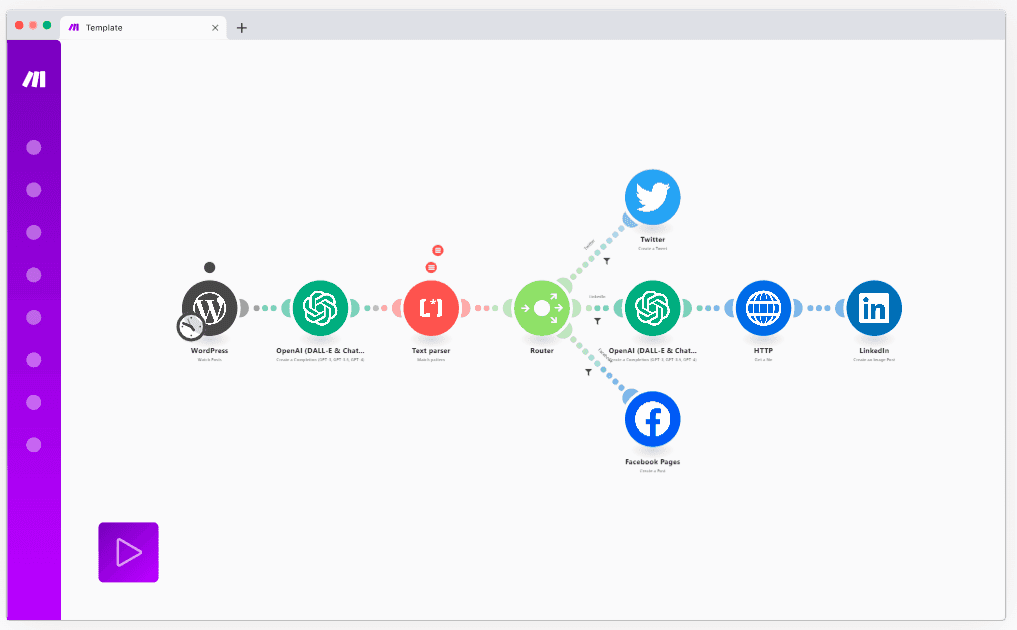
APIs are transforming into modular "building blocks," enabling businesses to assemble tailored digital workflows by stitching together microservices. This trend will boost low-code/no-code platforms, empowering business teams and "citizen developers" to compose sophisticated applications and automated workflows without extensive traditional coding. API marketplaces will emerge as central hubs, providing plug-and-play modules for functionalities like payments, analytics, and user identity, accelerating development and innovation.
Universal API Management in Multi-Cloud Environments
With increasing adoption of hybrid and multi-cloud strategies, demand for centralized visibility and governance of APIs distributed across different cloud providers will grow. Unified API management solutions will become essential, offering a single pane of glass for discovery, traffic control, policy enforcement, and lifecycle management of APIs regardless of deployment location. Cloud-neutral tools will reduce vendor dependency and support diverse API protocols, including legacy SOAP services and modern RESTful and GraphQL APIs. API management will integrate with container orchestration systems like Kubernetes to support dynamic scaling and microservice discovery.
The Evolving Role of GraphQL and gRPC
GraphQL and gRPC are increasingly challenging REST as preferred API protocols, particularly when performance and flexibility are critical. GraphQL enables clients to fetch precisely the data needed in a single request, reducing data over-fetching and improving efficiency. Conversely, gRPC facilitates high-speed, low-latency communication in microservices environments, making it suitable for internal service-to-service interactions. These technologies contribute to better API performance on mobile networks and edge devices. API design-first tools are expected to support multiple protocols to enable smooth transitions for organizations adopting these newer approaches.
APIs in IoT and Edge Computing
APIs will serve as conduits between edge devices, which generate large volumes of data, and centralized analytics platforms. In environments with limited connectivity, lightweight protocols such as MQTT and CoAP will gain traction, and API calls will increasingly carry event metadata for precise data interpretation. Edge-native APIs will enable local decision-making, allowing immediate responses to events; for example, in smart factories, they could trigger instant actions in response to machine faults without relying on cloud roundtrips. Innovation in IoT API design will be driven by considerations of security, latency, and efficient bandwidth management.
The emphasis on Artificial Intelligence (AI) and Machine Learning (ML) across multiple future trends—including autonomous APIs, AI-powered security, and AI optimization—indicates that the next wave of API evolution will be defined by intelligence and self-optimization. This signifies a shift where APIs move beyond being conduits for data exchange to becoming proactive, adaptive, and learning participants in digital ecosystems. This transformation will enable APIs to anticipate needs, respond dynamically to changes, and enhance their own performance and security, reshaping their role in the digital landscape.